Layered Finishes That Go Beyond Standard Coatings
Hybrid Flake Flooring in Cohoes for homeowners seeking visual depth and decorative concrete finishes in garages or basements
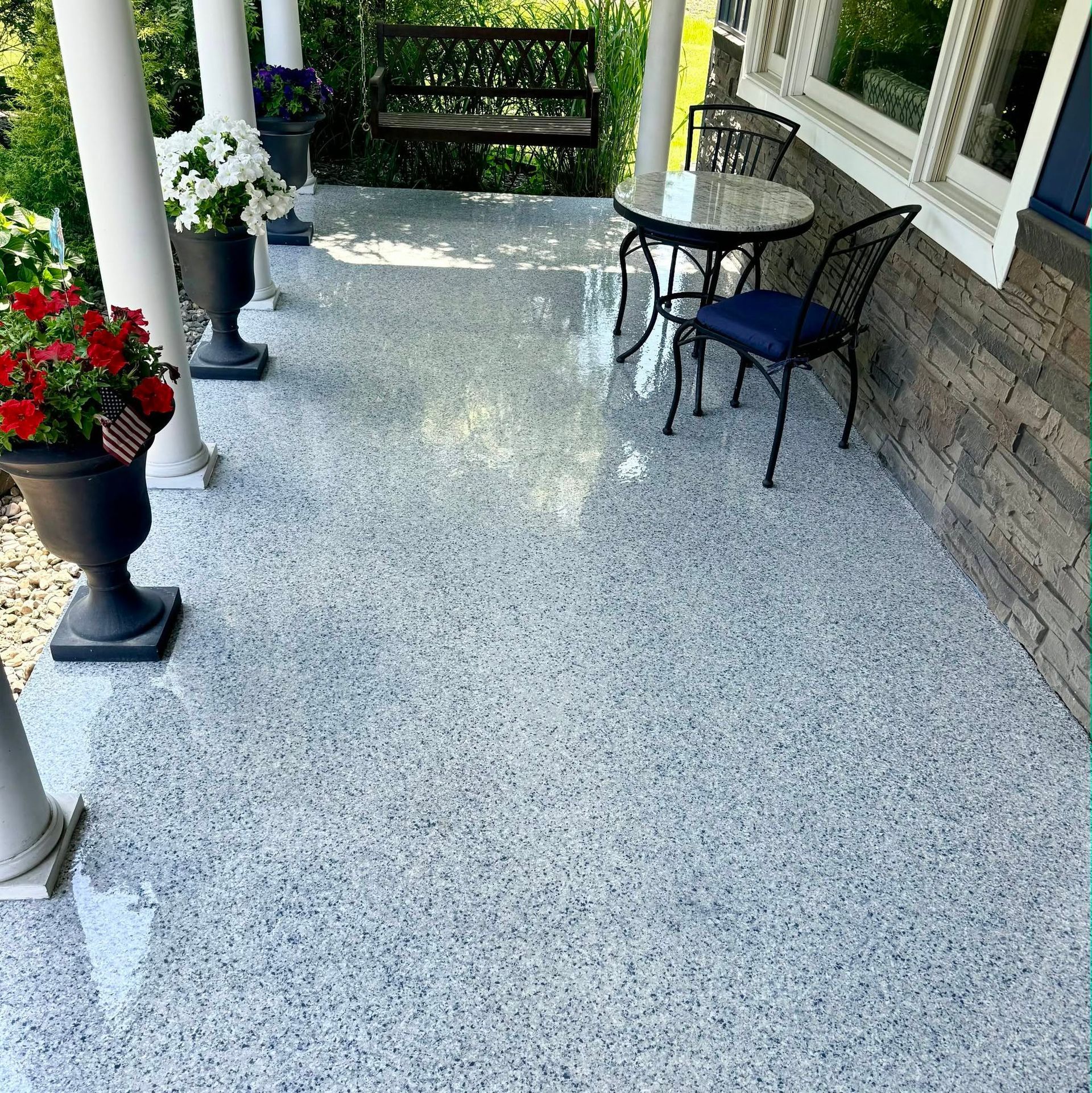
Hybrid flake flooring systems combine multiple flake sizes, colors, or application techniques to create a finished appearance that differs from both single-color coatings and standard flake broadcasts. Eastcoast Epoxy installs these systems on residential concrete where homeowners want more visual complexity than a uniform finish provides but prefer the durability and maintenance profile of coated floors over bare slabs. The hybrid approach often layers contrasting flake colors or mixes small and large flake sizes within the same broadcast, producing depth and variation that make large garage or basement floors feel less monotonous.
The installation process starts with the same surface preparation and epoxy base coat used in standard flake systems, but the decorative layer involves deliberate variation—broadcasting different flake types in separate passes, blending colors that create gradient effects, or adjusting density across different zones of the floor. The final topcoat seals everything into a unified surface that handles vehicle traffic, foot traffic, and the temperature swings common in Capital Region garages during winter heating cycles and summer ventilation. The owner's epoxy certification informs decisions about base coat adhesion, flake saturation limits, and topcoat thickness needed to lock the decorative layers into a durable finish.
Request a free estimate to explore hybrid flake combinations and see how layered finishes change the appearance of your concrete space.
Standard flake floors use one flake color and size broadcast to a consistent density, which creates a uniform speckled appearance across the entire surface. Hybrid systems introduce intentional variation—you might see a darker base coat with lighter flakes concentrated in high-visibility areas, or a blend of metallic and matte flakes that shift appearance as light angles change throughout the day. This variation gives homeowners more control over the finished look and allows the floor to complement specific color schemes or architectural details in adjacent living spaces.
Once the topcoat cures, the floor functions like any other flake system in terms of spill resistance and ease of cleaning, but the visual effect is more customized. You'll notice the floor draws the eye differently than plain concrete or single-color coatings, and the layered flake pattern hides minor surface imperfections, patching, or discoloration that would remain visible through thinner finishes. The hybrid approach also allows for zoning—using denser flake coverage in work areas where concrete wear is most visible and lighter coverage in vehicle lanes where tires would obscure the detail anyway.
Hybrid systems require more labor and material coordination than standard broadcasts, which affects project cost and timeline. The installer must control flake density carefully to avoid over-saturating the epoxy base or creating uneven topcoat buildup where flake layers overlap. Color selection also becomes more complex since the final appearance depends on how base coat, flake colors, and topcoat clarity interact under your specific lighting conditions, which is why samples or mockups often help homeowners visualize the finished floor before installation begins.
What Property Owners Want to Know About Hybrid Flake Floors
Homeowners across the Capital Region typically ask about the visual differences, practical performance, and project requirements before committing to hybrid flake systems in their garages or basements.
How do you choose which flake colors to combine in a hybrid system?
The base coat color sets the foundation, and flake selection depends on whether you want contrast that makes the flakes stand out or tonal blending that creates a subtler, more integrated appearance—bringing paint samples or photos of adjacent rooms helps match the floor to your home's existing palette.
Does combining multiple flake types affect how durable the finished floor is compared to standard systems?
The topcoat thickness and surface preparation determine durability more than flake variety—once encapsulated in cured epoxy and sealed with urethane, all flake types perform the same under vehicle and foot traffic, so the hybrid approach affects appearance rather than structural performance.
What happens if the flake pattern doesn't look the way you expected after installation?
Flake broadcast is a manual process with some inherent variation, which is why discussing density, color balance, and viewing samples beforehand matters—once the topcoat cures, the pattern is permanent, and changes would require grinding off the system and starting over.
Can hybrid flake flooring work in basement spaces that occasionally see moisture during heavy rain?
The coating itself resists surface moisture and cleans easily after minor seepage, but if your basement experiences regular water intrusion or rising groundwater, that issue must be addressed with proper drainage and waterproofing before any floor coating is applied, since trapped moisture will eventually delaminate even the best-installed system.
How does the textured flake surface handle snow melt and road salt tracked in from Cohoes streets during winter?
The sealed topcoat prevents salt and moisture from penetrating the coating or the concrete underneath, and the textured flake layer provides enough slip resistance that wet boot prints or tire tracks don't create hazardous smooth spots the way they might on polished concrete or smooth paint.
Eastcoast Epoxy walks through flake combinations, color options, and surface condition during free estimates, so you can see what hybrid systems would look like in your specific space. Schedule an estimate to discuss decorative options for your concrete floors.