Textured Concrete Finishes for Year-Round Home Use
Quartz Flooring in Cohoes for homeowners who want aggregate texture on finished concrete surfaces
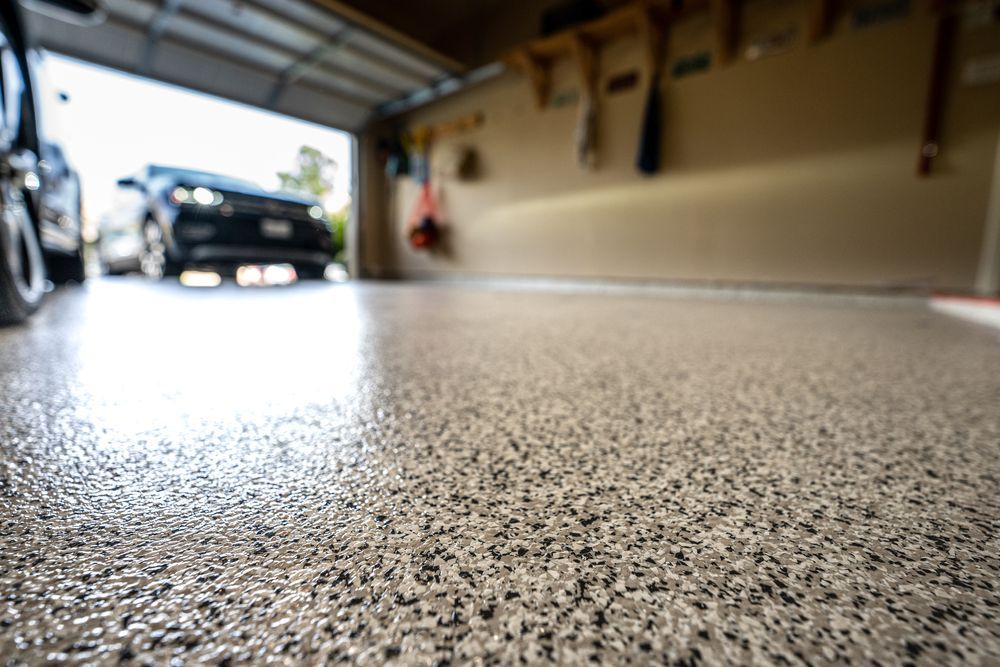
Garage floors and basement concrete slabs across Cohoes often remain unfinished long after homeowners have upgraded the rest of their living spaces, leaving a visual disconnect between polished interiors and industrial-looking concrete. Eastcoast Epoxy applies quartz flooring systems that combine colored epoxy resin with fine quartz aggregate, creating a textured surface that reads as intentional rather than utilitarian. The finished appearance differs significantly from smooth coatings or plain concrete—you see and feel the granular texture underfoot, and the light catches the quartz particles differently than flat paint or sealer would.
The process layers pigmented epoxy with broadcast quartz aggregate while the resin is still wet, then applies additional coats to encapsulate the aggregate and build up a finished surface. The quartz itself is sized silica sand that's been colored to match or contrast with the base epoxy, and the broadcast density determines how much texture you get in the final floor. Homes in the Capital Region often apply quartz systems in mudrooms, laundry areas, or basement workshops where the textured surface provides slip resistance and hides the minor scuffs that smooth coatings show more readily.
Schedule a free estimate to evaluate your concrete surface and discuss quartz color combinations that fit your home's existing finishes.
The quartz aggregate creates a wear layer that distributes impact and abrasion across thousands of small particles instead of concentrating force on a smooth resin surface. When you drag furniture, drop tools, or walk in wet boots across the floor, the texture prevents the single-point wear patterns that eventually dull smooth coatings. The aggregate also breaks up the visual monotony of large concrete areas—basement floors no longer look like unfinished construction zones, and garage spaces feel more like extensions of the home's finished square footage.
After installation, you'll notice the floor no longer produces concrete dust when swept, and spills stay on the surface rather than soaking into the slab. The textured finish catches light differently depending on angle and time of day, which adds visual interest to spaces that previously felt flat and gray. Quartz systems also allow for color customization that ties concrete areas into your home's broader palette, whether that means neutral tones that recede into the background or accent colors that define specific work zones.
Surface preparation remains the critical factor in how well any quartz system performs over time. Concrete must be profiled correctly to accept the epoxy base, and any existing coatings or sealers need complete removal before the new system goes down. Moisture testing matters in below-grade applications like basements, since rising vapor can delaminate even properly applied quartz floors if the slab lacks an adequate vapor barrier or if groundwater conditions have changed since the home was built.
Answers to Common Quartz Flooring Questions
Homeowners considering quartz systems often want clarity on how the textured finish compares to other coating options and what the installation requires in residential settings.
What does the quartz texture feel like compared to smooth concrete coatings?
The surface feels granular underfoot, similar to fine sandpaper, with enough texture to provide grip when wet but not so coarse that it's uncomfortable to walk on in stocked feet—the aggregate size and broadcast density control how pronounced the texture becomes.
How does quartz flooring perform in basements where humidity fluctuates seasonally?
Cured quartz systems are not affected by ambient humidity, but the concrete underneath can still wick moisture upward if it lacks a proper vapor barrier, which is why moisture testing with calcium chloride or relative humidity probes happens before any Capital Region basement installation to confirm the slab is dry enough to accept a coating.
Can quartz systems go over concrete that already has paint or sealer?
Existing coatings must be fully removed through grinding or shot blasting because epoxy needs direct contact with the concrete substrate to form a mechanical bond—any remaining paint or sealer acts as a weak layer that will eventually fail and take the new quartz system with it.
What color combinations work best for garage floors used by multiple vehicles?
Neutral base colors with contrasting quartz aggregate tend to hide tire marks and dirt accumulation better than light solid tones, and darker blends show less discoloration from tracked-in road grime during wet seasons common across the area.
How long does the quartz aggregate stay embedded in the epoxy under regular use?
The topcoat layers encapsulate the quartz fully, locking it into the resin matrix so individual particles don't dislodge during normal foot or vehicle traffic—aggregate only becomes exposed if the topcoat wears down from years of heavy abrasion or if surface prep was insufficient and the entire system begins to delaminate.
Eastcoast Epoxy evaluates your concrete condition, discusses texture and color preferences, and provides project timelines during free on-site estimates. Contact us to review quartz flooring options for your residential concrete surfaces.