Flowing Visual Effects for Updated Interior Concrete
Metallic Flooring in Cohoes for homeowners who want distinctive, reflective finishes rather than conventional solid-color coatings
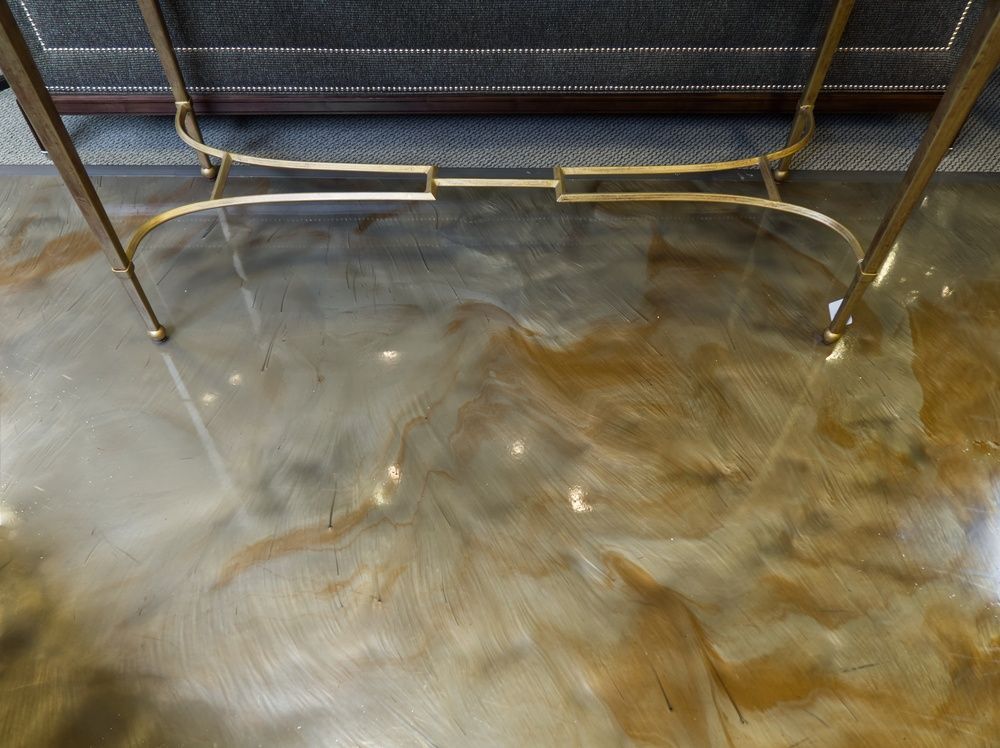
Concrete floors in basements, entryways, or converted garage spaces often remain visually flat even after homeowners invest in updated lighting and finishes elsewhere in the home. Metallic flooring systems use pigmented epoxy with suspended metallic particles that create flowing, marbled patterns as the coating cures, producing depth and light reflection that differ significantly from solid colors or flake finishes. Eastcoast Epoxy applies these systems in residential settings where homeowners want the concrete to function as a design element rather than something to cover with rugs or ignore. The finished surface looks intentional and custom, with color shifts and pearl-like shimmer that change as you move through the space or as natural light angles shift during the day.
The installation involves troweling metallic epoxy across prepared concrete and using deliberate techniques—dragging, stippling, or allowing the coating to self-level with controlled manipulation—to influence how the metallic particles distribute before the epoxy gels. No two metallic floors look identical because the flow patterns depend on application speed, temperature, humidity, and how the installer works the material. Properties in the Capital Region typically see metallic floors in finished basements, home offices built over concrete slabs, or entryways where the floor needs to make an immediate visual impression without introducing maintenance-intensive materials like polished stone.
Arrange an on-site consultation to review your concrete surface and discuss metallic color options that align with your interior finishes.
Surface preparation for metallic systems follows the same grinding and profiling process used for other epoxy coatings, but the application itself demands more skill because the installer actively shapes the pattern while the material is still workable. You can't predict exact pattern repetition between rooms or projects, which is part of the appeal—the floor becomes a one-off installation rather than something replicated from a catalog sample. The metallic particles settle and orient based on how the epoxy moves, creating veining, swirls, or cloud-like effects that shift visually as you walk past.
After the topcoat cures, the floor reflects light more dramatically than flat coatings, and the metallic shimmer becomes more or less pronounced depending on overhead versus ambient lighting. You'll notice the floor no longer looks like plain concrete or a basic painted surface—it reads as a finished architectural feature. Spills still sit on the sealed surface for easy cleanup, and the coating protects the concrete from staining or dusting, but the visual effect is what distinguishes metallic systems from more utilitarian coating options.
Metallic floors work best in spaces with consistent lighting and where pattern variation is acceptable. If you need identical appearance across multiple rooms or prefer predictable uniformity, solid-color or flake systems offer more control. Metallic coatings also show dust and fine debris more readily than textured finishes, so they require more frequent sweeping or dust-mopping in high-traffic areas. The coating doesn't wear differently than other epoxy systems, but the reflective surface makes surface marks more visible until cleaned.
Common Questions About This Service
Residents considering metallic flooring often want to understand how the finish behaves in everyday use and what to expect from the custom application process.
Why do metallic floors look different from one project to another even when using the same color?
The epoxy remains workable for a limited time after application, and the way the installer manipulates the material—combined with ambient temperature and humidity in Cohoes during installation—affects how the metallic particles flow and settle, so each floor develops its own unique pattern that can't be exactly replicated.
What Interior spaces make the most sense for metallic epoxy finishes?
Finished basements, home offices, entryways, and laundry rooms work well because they're climate-controlled spaces where the visual effect can be appreciated and where concrete slabs are already in place—garages can also receive metallic coatings, but the dramatic appearance is often less noticeable in utilitarian spaces with limited sightlines.
How does the reflective metallic surface handle everyday foot traffic and furniture movement?
The cured epoxy and topcoat provide the same abrasion resistance as other coating systems, so normal use won't damage the metallic effect, though the reflective finish does show dust, scuffs, and watermarks more readily than matte or textured coatings until wiped clean.
Can you choose specific pattern styles or control how the metallic swirls turn out?
You can select color combinations and general design direction—more linear veining versus organic swirls, for example—but the exact pattern develops as the installer works the epoxy and as the material cures, so you're commissioning a custom finish rather than ordering a predetermined look from a sample board.
What should you know about lighting before installing a metallic floor?
The floor's appearance changes significantly based on light sources—natural daylight brings out different tones than LED or incandescent bulbs, and the reflective particles shimmer more under direct lighting than in spaces lit primarily by ambient or indirect fixtures, so considering your room's lighting setup helps set realistic expectations for how the finished floor will look throughout the day.
Eastcoast Epoxy discusses color options, reviews your space's lighting and layout, and explains what pattern variation to expect during free estimates. Request an estimate to explore whether metallic flooring fits your project goals and interior design preferences.